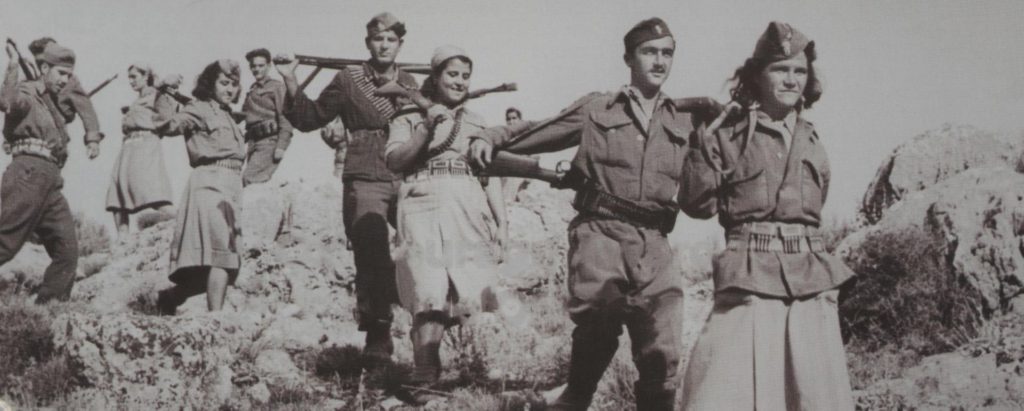
In all of world history, there are only a handful of examples of “David” courageously taking on “Goliath” and favorably changing the course of history. Many of these events have become part of the collective public memory around the world like the film 300, telling the tale of the Battle of Thermopylae that kept democracy from being killed in its infancy. However, largely forgotten around the world among these rare acts of civilization-enabling heroism is the Greek people’s major contribution in World War II to the defeat of Hitler’s Axis Forces.
According to numerous western world leaders at the time, without Greece, Hitler’s unprecedented powerful war-machine may well have won the war. Imagine a world without the many groups of people Hitler would have continued to exterminate. Our lives would be very different today.
“When the entire world had lost all hope, the Greek people dared to question the invincibility of the German menace, raising against it the proud spirit of freedom.”
– President Franklin Roosevelt
THE STORY OF OXI DAY
The free world watched as one-by-one 15 countries and foreign entities across Europe surrendered, were defeated, or like Great Britain, sent into retreat by Hitler’s Axis forces. At 3:00 a.m. on October 28, 1940, a representative of the Axis forces arrived at the Greek prime minister’s residence and demanded Greece’s surrender. The prime minister replied with one single word – OXI – No.
A few hours later, the Axis forces descended on Greece, expecting it to fall quickly. The people of Greece refused to surrender and bravely stepped forward to fight. In doing so, Greece shocked the world by inflicting the first Axis invasion defeat in World War II.
News of Greece’s triumph flooded the world’s radio airwaves and the front pages of newspapers. A grateful world celebrated — no one expected such a small nation to derail the seemingly unstoppable Axis forces.
Following OXI Day, Hitler made the fateful decision to invade Greece, delaying the Axis war timeline and forcing Hitler into the debilitating Russian winter beginning his defeat.
THE BATTLE OF CRETE
On the morning of May 20, 1941, Germany attempted the first large-scale airborne invasion in history on the island of Crete. Imbued with the strength of their neighbors, civilians gathered whatever weapons they could find in their homes — from knives and axes to farm tools — to attack German paratroopers as they landed on Cretan ground.
“For the sake of historical truth I must verify that only the Greeks, of all the adversaries who confronted us, fought with bold courage and highest disregard of death.” – Hitler
The Battle of Crete marked the first and the most significant event where Germans encountered substantial opposition from a local population. With unexpectedly severe losses reaching over 6,000 German casualties and over 12,000 Axis soldiers captured, the losses were so severe that Hitler banned further airborne operations the remainder of World War II, a major strategic consequence for Germany as Hitler refused to attempt a major airborne operation ever again during World War II.